Aksaro: Evaluating a Display Serif for Vintage and Luxury Design
In the landscape of contemporary typography, there is a distinct resurgence of interest in historical aesthetics. Designers are frequently tasked with bridging the gap between modern readability and antique charm, particularly when working on projects that demand a sense of heritage or exclusivity. The Aksaro Display Serif Typeface enters this space as a specialized tool for creators seeking to evoke the grandeur of the Art Deco and Victorian eras without sacrificing digital functionality. Unlike standard serif families designed for extended reading, Aksaro is engineered specifically for display purposes, offering a level of ornamentation and stylistic variation that transforms simple text into a central visual element.
For professionals evaluating type assets, the primary question is rarely just about aesthetics; it is about utility and reliability. Aksaro distinguishes itself through a combination of stately proportions and comprehensive OpenType features. It serves as a practical solution for high-end branding, editorial design, and packaging where a custom-drawn appearance is required but the budget or timeline does not allow for bespoke lettering. Understanding the specific capabilities and appropriate applications of this typeface is essential for integrating it effectively into a professional workflow.
Defining Characteristics and Historical Resonance
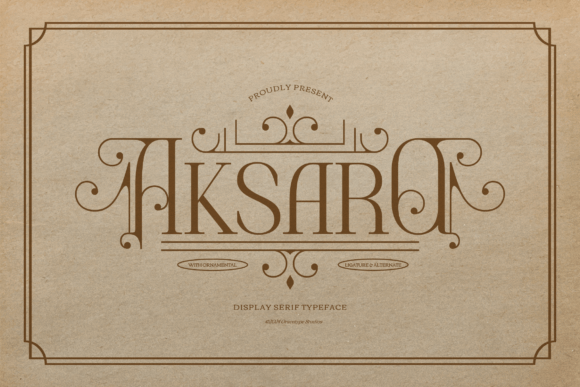
Aksaro is defined by its tall, condensed letterforms and intricate decorative details. The vertical stress of the characters immediately suggests formality and elegance, a hallmark of late 19th-century and early 20th-century advertising typography. However, what separates Aksaro from generic revival fonts is the integration of elaborate flourishes and swashes directly into the font file. These are not merely afterthoughts; they are structurally integrated to maintain consistent stroke weight and rhythm with the base glyphs.
The typeface successfully balances two distinct historical influences. It possesses the geometric precision associated with Art Deco, visible in the sharp terminals and balanced curves, while retaining the organic, hand-drawn fluidity of Victorian woodblock printing. This duality makes it versatile enough for various "vintage" briefs. Whether the goal is the sleek sophistication of a 1920s jazz club poster or the ornate intricacy of an 1890s apothecary label, Aksaro provides the necessary stylistic foundation. The ornamentation is rich but controlled, avoiding the cluttered appearance that often plagues lesser-quality decorative fonts.
Technical Flexibility and Customization
From a production standpoint, the value of a display font lies in its adaptability. A static set of letters can quickly become repetitive across multiple touchpoints in a branding campaign. Aksaro addresses this through extensive ligatures and stylistic alternates. These features allow designers to alter the texture of a headline or logo simply by toggling options within their design software. The inclusion of versatile ligatures helps solve spacing issues common in tight display settings, while alternates provide the variation needed to make typeset text appear more organic and less mechanical.
Crucially, Aksaro is PUA-encoded (Private Use Area). For designers who do not use software with full OpenType support, or who work in environments like Canva or certain web builders, this encoding ensures that all special glyphs, swashes, and ornaments remain accessible. This technical consideration significantly broadens the font’s usability beyond Adobe Creative Cloud users. It ensures that the asset remains functional regardless of the platform, protecting the investment for freelancers and agencies that operate across diverse software ecosystems.
Practical Applications in Professional Design
Evaluating Aksaro requires looking at specific use cases where its strengths align with project requirements. It is not a universal solution, but rather a targeted instrument for specific communication goals.
- Luxury Product Packaging: The font’s weight and detail hold up exceptionally well on physical substrates. On wine labels, perfume boxes, or artisanal food packaging, the intricate serifs and swashes convey craftsmanship and premium quality. The tall aspect ratio allows for impactful sizing even in narrow label formats.
- Wedding and Event Stationery: In the wedding industry, clients often seek a balance between tradition and personality. Aksaro provides the requisite formality for invitations and place cards while offering enough unique character to avoid looking like a template. The swashes serve as built-in dividers or framing elements, reducing the need for separate vector graphics.
- Hospitality Branding: Restaurants, bars, and boutique hotels benefit from the typeface’s atmospheric quality. Menu headers, signage, and cocktail lists utilizing Aksaro instantly establish a thematic tone. The legibility of the base characters ensures that despite the decoration, patrons can read offerings without strain.
- Editorial and Book Covers: For fiction genres such as historical romance, mystery, or fantasy, cover typography must signal the genre immediately. Aksaro acts as a visual shorthand for these categories, providing a period-appropriate aesthetic that attracts the target readership.
Workflow Considerations and Limitations
While Aksaro is a robust asset, professional objectivity demands acknowledging its limitations. As a display serif, it is strictly unsuitable for body copy. The high contrast and decorative elements that make it stunning at 48pt or larger will render it illegible at 12pt. Designers must pair it with a clean, neutral sans-serif or a highly legible transitional serif to create a balanced hierarchy. Relying on Aksaro for subheads or captions will likely result in poor user experience and visual fatigue.
Furthermore, the abundance of swashes and alternates requires restraint. There is a temptation to utilize every available glyph because they are visually striking. However, overuse can degrade the sophistication the font aims to achieve. Effective use of Aksaro involves treating the alternates as accents rather than defaults. A successful layout might feature one or two key flourishes to draw the eye, while keeping the majority of the text in the standard stylistic set to maintain clarity and elegance.
Users should also be mindful of spacing when using the more elaborate ligatures. While the font is well-kerned, extreme swashes may require manual optical adjustment depending on the surrounding elements. Testing the typeface at actual print size or final screen resolution is mandatory; what looks spacious on a 27-inch monitor may feel cramped on a business card or mobile screen.
Assessing Long-Term Value and Audience Fit
For the intended audience of marketers, entrepreneurs, and designers, the decision to acquire Aksaro should be based on recurring needs rather than a single project. If your portfolio or client roster frequently touches upon luxury, heritage, hospitality, or period-specific themes, this typeface offers significant long-term value. Its comprehensive character set reduces the time spent searching for complementary ornaments or drawing custom swashes, streamlining the creative process.
The font appeals most strongly to those who understand that typography is a primary carrier of brand meaning. It is less suited for tech startups, corporate annual reports, or minimalist modernist projects where such ornamentation would be semantically dissonant. However, for creators operating in spaces where emotion, history, and tactile quality are paramount, Aksaro performs reliably.
Ultimately, Aksaro succeeds because it respects the intelligence of the user. It provides high-quality raw materials—beautifully drawn vectors and smart OpenType programming—and trusts the designer to apply them with discretion. It avoids the trap of being overly prescriptive or gimmicky, instead offering a sophisticated vocabulary for visual storytelling. When used with intention and paired correctly, it elevates design work from competent to memorable, justifying its place in a professional typographic toolkit. The combination of aesthetic fidelity to the golden age of design and modern technical standards makes it a pragmatic choice for today’s visual communicators.