Evaluating Aureline Castelo: An Elegant Serif Typeface for Sophisticated Design
Selecting the right typeface is often the most critical decision in establishing a visual identity. For designers and brand strategists seeking a balance between historical reverence and contemporary refinement, Aureline Castelo - Elegant Serif Typeface presents a distinct option within the crowded market of display serifs. This font family is characterized by its high-contrast strokes, romantic flourishes, and sophisticated structure, positioning it as a specialized tool rather than a universal utility. Understanding where this typeface excels—and where it falls short compared to other serif categories—is essential for making an informed licensing or selection decision.
Defining the Aesthetic Profile of Aureline Castelo
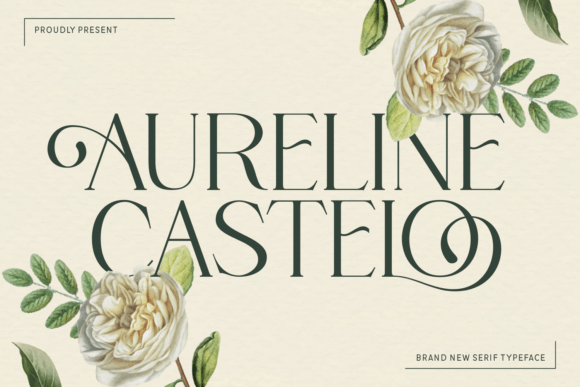
Aureline Castelo belongs to the Didone or Modern Serif classification, yet it incorporates softer, more organic curves that distinguish it from the rigid geometry of traditional neoclassical types. The design prioritizes vertical stress and extreme contrast between thick and thin lines, creating a dramatic visual rhythm. What sets this specific typeface apart is its integration of calligraphic influences into the serif structure. While many high-contrast serifs can feel cold or overly mechanical, Aureline Castelo introduces a romantic warmth through subtle terminal swashes and fluid connections.
This duality makes it particularly effective for projects requiring emotional resonance alongside luxury. The letterforms are constructed to command attention at large sizes, functioning primarily as a display face. The x-height is moderate, allowing for elegant proportions in headlines without sacrificing the delicate nature of the hairlines. When evaluating this typeface, it is important to recognize that its primary function is atmospheric; it communicates heritage, femininity, and exclusivity before it communicates literal text.
Comparative Analysis: Aureline Castelo vs. Standard Serif Categories
To determine if this typeface is the correct fit, one must compare it against adjacent styles. The typography landscape offers numerous alternatives, each serving different functional needs.
- Versus Traditional Old Style Serifs: Fonts like Garamond or Caslon offer superior readability for long-form body text due to lower contrast and bracketed serifs. Aureline Castelo lacks the structural durability for paragraphs. If your project requires extensive reading, this typeface should be restricted to titles only, paired with a sturdy old style or sans-serif companion.
- Versus Geometric Modern Serifs: Typefaces such as Bodoni or Didot share the high-contrast DNA of Aureline Castelo but often present a sharper, more austere aesthetic. Where geometric moderns convey fashion-forward minimalism and intellectual rigor, Aureline Castelo leans toward classic romance and ornamental sophistication. Choose the former for editorial starkness; choose the latter for bridal, cosmetic, or heritage branding.
- Versus Script and Hand-Lettering: Many designers consider scripts when aiming for a "romantic" feel. However, scripts can suffer from legibility issues and overuse. Aureline Castelo offers a middle ground: the elegance of hand-lettering with the structural stability and legibility of a serif. It provides formality that pure scripts often lack while retaining more personality than standard block letters.
Strengths and Ideal Use Cases
The value proposition of Aureline Castelo - Elegant Serif Typeface lies in its ability to instantly elevate perceived value. In practical application, this translates to specific industries and mediums where aesthetics drive conversion or engagement.
Luxury Branding and Packaging
In the beauty, fragrance, and jewelry sectors, packaging serves as a tactile extension of the product. The fine hairlines and refined serifs of Aureline Castelo reproduce beautifully on textured papers and foil stamping. Its distinct character helps brands avoid the generic "luxury sans-serif" trap, offering a sense of established history even for new products. The typeface’s inherent sophistication suggests craftsmanship, making it ideal for labels where space is limited but impact must be high.
Editorial and Event Stationery
For wedding invitations, gala programs, and high-end magazine covers, the font’s romantic undertones are a significant asset. Unlike utilitarian serifs, Aureline Castelo carries an emotional weight that aligns with celebratory or artistic content. Its alternate characters and ligatures (if included in the specific release) allow typographers to customize spacing and flow, preventing the repetitive cadence that can make digital typography feel sterile.
Digital Hero Sections
On websites, this typeface performs best in hero headers or pull quotes. At large pixel dimensions, the contrast creates a striking silhouette against negative space. It signals to the user immediately that the site experience will be curated and premium. However, this strength is contingent on proper implementation; responsive scaling must be managed carefully to preserve line integrity on mobile devices.
Tradeoffs, Limitations, and Technical Considerations
No typeface is without compromise. Evaluating the limitations of Aureline Castelo is just as important as appreciating its beauty. Being aware of these tradeoffs prevents costly redesigns or accessibility failures later in the project lifecycle.
Readability Constraints
The defining feature of this typeface—high stroke contrast—is also its greatest liability. In small sizes or low-resolution environments, the hairlines may disappear or break up, rendering text illegible. This makes Aureline Castelo unsuitable for UI elements, navigation menus, footnotes, or dense body copy. Designers must establish a minimum point size threshold during the testing phase. If your layout requires versatility across multiple scales, you will need to pair this font with a highly legible secondary typeface.
Accessibility and Contrast Ratios
Web Content Accessibility Guidelines (WCAG) require sufficient contrast between text and background. Thin serifs inherently struggle with this because their visual weight is uneven. When using Aureline Castelo - Elegant Serif Typeface digitally, ensure that the color contrast ratio exceeds standard requirements to compensate for the thin strokes. Light gray text on a white background, while aesthetically pleasing in mockups, may fail accessibility audits when rendered in this specific font style. Always test with screen readers and low-vision simulation tools.
Tonal Specificity
This is not a neutral workhorse. Its strong personality means it can clash with certain brand voices. It is ill-suited for tech startups, corporate finance, medical institutions, or any sector where trust is derived from stability, neutrality, or modernity rather than tradition and ornamentation. Using this font in the wrong context can create cognitive dissonance, making a serious organization appear frivolous or outdated. It is a specialized instrument, not a general-purpose solution.
Decision Framework: When to Choose Alternatives
Making the final selection requires honest assessment of project parameters. Use the following criteria to validate whether Aureline Castelo is the appropriate resource.
- Hierarchy Requirement: Do you need a single typeface for both headlines and body text? If yes, look elsewhere. Aureline Castelo is a display specialist. If you need a superfamily that spans from caption to title, explore transitional serifs or versatile humanist sans-serifs.
- Medium Durability: Will the text be viewed primarily on low-quality screens or printed via offset methods that may cause ink spread? High-contrast serifs are fragile in reproduction. Test print proofs are mandatory before committing to this style for physical media.
- Brand Longevity: Is the brand aiming for timeless elegance or trendy relevance? While Aureline Castelo feels classic, the current resurgence of romantic serifs is partly trend-driven. If you require absolute neutrality to future-proof a corporate identity, a more restrained serif may offer better longevity. However, for lifestyle brands where emotional connection drives loyalty, this typeface’s distinctiveness is an advantage.
- Budget and Licensing: Evaluate the licensing terms relative to usage. Display fonts are often priced differently than text families. Ensure the license covers all intended webfont weights and desktop installations. Sometimes, investing in a comprehensive text-and-display pairing from a single foundry offers better value than licensing a standalone display face separately.
Practical Pairing Strategies
To maximize the effectiveness of Aureline Castelo - Elegant Serif Typeface, intentional pairing is required. The goal is to support its elegance without competing with it.
- Geometric Sans-Serif: A clean, geometric sans-serif (such as Futura or Montserrat) provides a modern counterpoint that grounds the romance of Aureline Castelo. This combination works well for fashion e-commerce, balancing aspiration with usability.
- Neutral Grotesque: For a more understated, editorial look, pair with a neutral grotesque like Helvetica or Inter. The invisibility of the sans-serif allows the serif to act as the sole protagonist, guiding the reader’s eye through the hierarchy.
- Monospaced Typeface: For avant-garde or art-house projects, contrasting the fluid elegance of Aureline Castelo with a technical monospace font creates tension and contemporary relevance. This approach subverts traditional expectations of "elegance," appealing to younger, design-literate demographics.
Ultimately, the decision to adopt Aureline Castelo should be driven by the specific emotional and functional demands of the project. It is a typeface that rewards careful handling and contextual awareness. By understanding its position within the broader typographic ecosystem—its strengths in display settings, its limitations in body text, and its unique tonal qualities among peers—designers can leverage this elegant serif to create work that is both visually arresting and strategically sound. Thorough testing across intended media remains the final, indispensable step in validation.