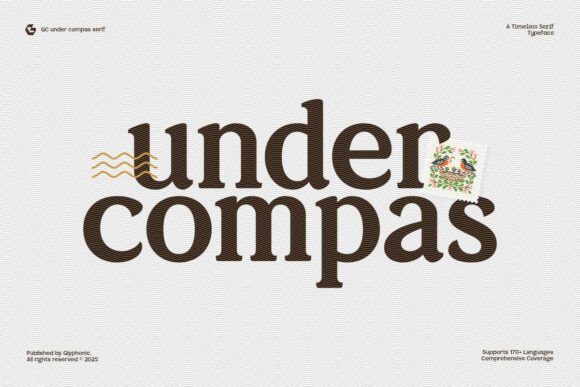
GC Under Compass: Elevating Design with Timeless Serif Typography
Selecting the right typeface is often the difference between a design that feels disposable and one that endures. GC Under Compass has emerged as a significant choice for designers seeking to bridge the gap between historical elegance and modern functionality. This serif typeface blends classic letterform traditions with contemporary refinement, offering a warmth and sophistication that many purely digital fonts lack. However, owning a high-quality font is only the first step; understanding how to leverage its specific features is what separates professional results from amateur attempts.
Many creators are drawn to GC Under Compass for its narrative quality. It is not merely a collection of glyphs but a tool designed to evoke heritage and storytelling. Whether you are designing literary covers, elegant packaging, or branding for a boutique business, this typeface provides a confident presence. Yet, even experienced designers sometimes overlook the technical nuances that make this font truly versatile. By addressing common oversights in selection, application, and technical implementation, you can ensure your typography adds genuine depth and charm to your projects rather than creating visual friction.
Misunderstanding the Role of Narrative in Serif Selection
A frequent mistake occurs when designers choose GC Under Compass solely for its aesthetic beauty without considering its narrative weight. This is not a neutral sans-serif intended for data-heavy dashboards or utility interfaces. It is a typeface with character, subtle curves, and harmonious proportions that demand attention. Using it in contexts requiring invisible typography often leads to a clash between form and function.
When evaluating this font, ask yourself if the project requires a sense of direction and history. If you are working on a technical manual or a minimalist app interface, the distinct personality of GC Under Compass might distract users. Conversely, if you are tasked with editorial layouts, book titles, or heritage-inspired branding, leaning into its traditional roots is essential. The error lies in forcing a storytelling font into a utilitarian role. Instead, reserve this typeface for projects where the text itself is meant to be savored, such as luxury product descriptions, wedding stationery, or long-form journalism.
Overlooking PUA Encoding and Alternate Glyphs
One of the most practical advantages of GC Under Compass is that it is PUA encoded. This technical feature allows effortless access to all glyphs, swashes, and alternate characters through standard character map tools or design software glyph panels. Surprisingly, many users never explore these alternates, defaulting to the standard keyboard layout and missing the font's true versatility.
Relying only on the base characters limits the typeface’s potential for custom branding and unique headlines. The included swashes and alternates are designed to enhance the handcrafted feel of the serif. For example, using a standard capital 'T' might look perfectly acceptable, but swapping it for an available swash variant could transform a static title into a dynamic focal point. Failing to utilize these extras results in a generic appearance that does not justify the investment in a premium font.
- Check the Glyph Panel: Always open the glyph panel in Illustrator, InDesign, or Affinity Designer before finalizing your type treatment.
- Test Swash Combinations: Ensure that decorative elements do not collide with adjacent letters or disrupt readability.
- Verify Software Compatibility: While PUA encoding works across most platforms, confirm that your specific workflow supports easy glyph insertion.
Neglecting Hierarchy and Pairing Strategies
Because GC Under Compass possesses such a strong, confident presence, beginners often overuse it. Applying this distinctive serif to every element of a layout—from the main headline down to the fine print—creates visual monotony and reduces legibility. A timeless design relies on contrast, not uniformity.
The solution is strategic pairing. This typeface excels as a display font or for subheads where its warmth can shine without overwhelming the reader. For body copy, consider pairing it with a clean, neutral sans-serif or a more restrained serif that complements rather than competes. If you must use GC Under Compass for extended reading, increase the line height and tracking slightly to accommodate its traditional proportions. Ignoring these spacing adjustments can make dense text blocks feel claustrophobic, undermining the sophisticated reading experience the font was designed to provide.
Evaluating Licensing and Technical Integrity
In the rush to acquire new design assets, creators sometimes bypass official channels or ignore licensing terms. This is particularly risky with specialized typefaces like GC Under Compass. Downloading unauthorized copies not only raises ethical concerns but often results in corrupted files missing the crucial PUA-encoded glyphs and alternates mentioned earlier. A broken font file wastes hours of troubleshooting time and compromises the quality of client deliverables.
Furthermore, understanding the license scope is vital for commercial safety. A personal license does not cover client work, merchandise, or large-scale distribution. Before integrating this font into a brand identity or product packaging, verify that your license permits the intended usage. Investing in the correct commercial license upfront prevents costly legal issues and rebranding efforts later. Treat typography procurement with the same diligence as stock photography or software subscriptions; proper documentation protects both your reputation and your business.
Practical Checklist for Implementation
To maximize the value of GC Under Compass and avoid common pitfalls, adopt a systematic evaluation process before starting your next project. This ensures the typeface serves your communication goals effectively.
- Assess the Emotional Tone: Does the project benefit from warmth and tradition? If the goal is futuristic or strictly clinical, reconsider your choice.
- Audit Available Alternates: Spend ten minutes exploring the full glyph set. Identify three to five alternates that align with your brand voice.
- Prototype at Multiple Sizes: Test the font at headline scale (72pt+) and body scale (10-12pt). Ensure the intricate details remain crisp and readable at smaller sizes.
- Review Spacing Metrics: Adjust kerning specifically for logo marks and titles. Automated metrics are a starting point, not a finish line, especially with serifs featuring elaborate curves.
- Confirm Output Requirements: If designing for web, ensure you have the appropriate webfont files. If for print, verify high-resolution vector integrity.
Ultimately, GC Under Compass offers a refined toolkit for designers who value craftsmanship. Its blend of familiar forms and fresh execution makes it a powerful asset for storytelling. By respecting its narrative nature, fully utilizing its technical features, and applying sound typographic principles, you move beyond simple font selection to true typographic artistry. Avoid the temptation to treat it as just another serif; instead, engage with its unique characteristics to create work that feels intentional, polished, and enduring.