Shutterborn: Bridging Gothic Tradition and Futuristic Design
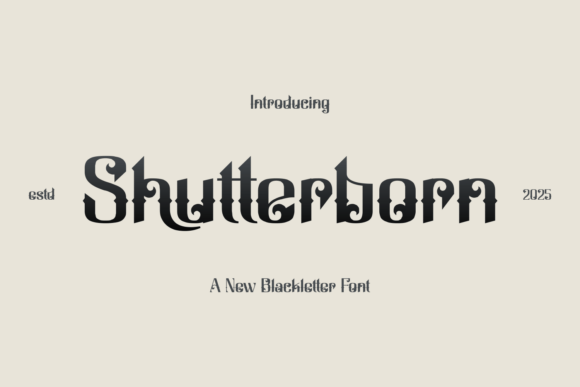
In the vast landscape of digital typography, finding a typeface that feels both historically grounded and distinctly modern is a rare challenge. Designers often face a binary choice: select a traditional blackletter font that evokes medieval manuscripts but risks looking outdated, or choose a sleek sans-serif that feels contemporary but lacks soul. Shutterborn emerges as the sophisticated solution to this dichotomy. It is a sleek and modern blackletter font that masterfully blends sharp gothic forms with smooth, flowing curves, creating a visual language that speaks to both the past and the future.
This article explores the design philosophy behind Shutterborn, its practical applications in modern branding and media, and why this unique typeface has become a vital tool for creatives seeking to balance tradition with innovation. Whether you are a seasoned graphic designer, a filmmaker, or a business owner looking to redefine your visual identity, understanding the nuances of Shutterborn will help you leverage its cinematic potential effectively.
The Anatomy of Modern Blackletter
To appreciate Shutterborn, one must first understand the evolution of blackletter typography. Historically associated with Gutenberg’s printing press and centuries of European religious texts, blackletter (or Gothic script) is characterized by dense textures, angular strokes, and ornate complexity. While beautiful, these traditional traits can sometimes hinder readability in digital environments or feel too aggressive for modern commercial use.
Shutterborn reimagines these historical constraints through a contemporary lens. The typeface retains the vertical stress and dramatic contrast inherent to gothic scripts but softens the rigidity with inventive character shapes. Where a traditional Fraktur might end in a harsh spike, Shutterborn transitions into a smooth, flowing curve. This hybridization creates a "cinematic" quality—a sense of motion and narrative that static fonts often lack.
Gradient Styling and Visual Depth
One of the most defining features of Shutterborn is its subtle gradient styling. In traditional typography, ink is uniform; in digital design, however, color and light are dynamic tools. Shutterborn incorporates gradients not merely as an afterthought, but as a structural element of the letterforms themselves. This gives the text a three-dimensional appearance, suggesting metallic sheens, neon glows, or ethereal mist depending on the color palette applied.
This attention to depth makes the font exceptionally versatile. It moves beyond flat vector art into something that feels tactile and alive. For designers working in UI/UX or motion graphics, this built-in dimensionality reduces the need for heavy post-processing effects, allowing the typography to stand strong on its own while remaining adaptable to various background treatments.
Practical Applications: From Cinema to Commerce
The true test of any display font is its utility across different mediums. Shutterborn’s unique blend of boldness and refinement makes it particularly effective in several key areas of modern creative work.
Cinematic Titles and Entertainment Branding
The entertainment industry thrives on atmosphere. Movie titles serve as the audience's first impression of a film's tone, and Shutterborn excels in this high-stakes environment. Its futuristic gothic aesthetic is perfectly suited for genres that blend history with speculation, such as:
- Dark Fantasy and Sci-Fi: Films like Dune or Warhammer 40k require typography that suggests ancient lineage within a futuristic setting. Shutterborn bridges this gap effortlessly.
- Horror and Thrillers: The sharp angles evoke tension and danger, while the smooth curves prevent the design from becoming cartoonish or cliché.
- Historical Dramas with a Twist: Period pieces that aim for a stylized, anachronistic vibe benefit from a font that respects history without being bound by it.
Music and Album Art
In the music industry, visual identity is as important as the sound itself. Genres ranging from synth-wave and industrial metal to avant-garde hip-hop utilize Shutterborn to signal sophistication. The font’s rhythmic flow mirrors musical composition, making it an ideal choice for album covers, concert posters, and merchandise. Unlike standard gothic fonts that pigeonhole artists into specific subgenres, Shutterborn’s modern curves allow for cross-genre appeal, signaling that the artist respects roots while pushing boundaries.
Fantasy Branding and Gaming
Video games and fantasy literature rely heavily on world-building. Typography acts as a silent narrator, establishing the rules of the universe before a single word of lore is read. Shutterborn provides a "premium" fantasy aesthetic. It avoids the rough, hand-drawn look of amateur fantasy design, offering instead a polished, professional appearance suitable for AAA game titles, luxury RPG accessories, and immersive event branding.
Balancing Boldness with Readability
A common misunderstanding about decorative fonts is that they must sacrifice legibility for style. While Shutterborn is undoubtedly a display font intended for headlines and logos rather than body text, it addresses readability concerns more effectively than many of its predecessors.
The "smooth, flowing curves" mentioned in its description serve a functional purpose beyond aesthetics. By opening up the counters (the enclosed spaces within letters) and reducing excessive ornamentation at stroke terminals, Shutterborn maintains clarity even at smaller display sizes. This is crucial for responsive web design and mobile marketing materials where screen real estate is limited.
However, users should still adhere to best practices when implementing this typeface:
- Limit Usage to Headlines: Use Shutterborn for titles, logos, and short pull quotes. Pair it with a clean sans-serif or geometric serif for body copy to ensure optimal reading comfort.
- Mind the Spacing: Blackletter fonts can appear dense. Slightly increasing tracking (letter-spacing) can improve legibility and enhance the modern, airy feel of the design.
- Contrast is Key: Because of its gradient styling and intricate forms, Shutterborn performs best against solid or subtly textured backgrounds. Busy photographic backgrounds may compete with the letterforms unless sufficient overlay or drop shadow is applied.
The Significance of Typographic Innovation
Why does a font like Shutterborn matter in the broader context of design? It represents a shift away from minimalism as the sole indicator of modernity. For decades, "modern" design has been synonymous with stripping away detail. Shutterborn challenges this notion by proving that complexity and decoration can coexist with contemporary sensibilities.
This reflects a larger cultural trend where audiences crave authenticity and texture in a digital-first world. We see this in the resurgence of vinyl records, the popularity of artisanal crafts, and the integration of AI-generated art with traditional techniques. Shutterborn fits squarely into this movement. It acknowledges our digital reality through its gradients and precision, yet it honors the human hand through its calligraphic heritage.
For businesses and educators, this offers a valuable lesson in communication. Visuals do not have to be sterile to be professional. A law firm specializing in intellectual property, a university history department, or a tech startup focused on heritage preservation can all utilize Shutterborn to convey trustworthiness and depth. It signals that the entity values craftsmanship and understands the power of visual storytelling.
Choosing the Right Tool for Your Vision
When selecting Shutterborn for your next project, consider the emotional resonance you wish to achieve. Are you aiming for cold, mechanical futurism, or warm, mystical nostalgia? The font sits comfortably in the middle, but your supporting design elements will tip the scale.
Pairing Shutterborn with neon colors and glitch effects pushes it toward cyberpunk and sci-fi territories. Conversely, combining it with parchment textures, gold foil stamps, and deep crimsons anchors it firmly in high fantasy and luxury branding. This chameleonic ability is what makes it a worthwhile investment for designers who work across multiple industries.
Ultimately, Shutterborn is more than just a collection of glyphs; it is a bridge between eras. It empowers creators to tell stories that are complex, layered, and visually arresting. By blending sharp gothic forms with smooth, flowing curves and subtle gradient styling, it offers a fresh vocabulary for visual expression. In a marketplace saturated with generic sans-serifs and overused vintage scripts, Shutterborn stands out as a bold, refined choice for those ready to define the future of their brand with a nod to the past.