Lunartype: Elevating Visual Identity Through Refined Serif Typography
In the competitive landscape of modern design, typography is often the deciding factor between a project that feels generic and one that exudes authority. Designers and brand strategists frequently face a specific dilemma: finding a typeface that balances contemporary minimalism with traditional elegance. Many serif fonts lean too heavily into antiquated aesthetics, while modern sans-serifs can sometimes lack the warmth and prestige required for luxury markets. Lunartype emerges as a targeted solution to this challenge, offering a refined serif family that embodies sophistication without sacrificing readability or modern relevance.
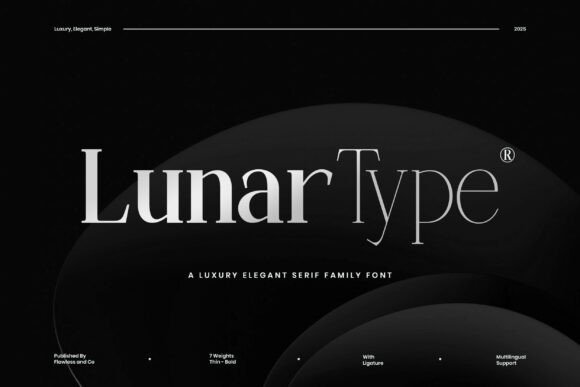
Lunartype is not merely a collection of letterforms; it is a comprehensive typographic system designed for high-end visual identities. Crafted with precision, it features a harmonious balance of thin and bold weights that allows for versatile application across digital and print media. For professionals seeking to elevate their design work, understanding how to leverage the quiet confidence of Lunar Type is essential for creating brands that resonate with discerning audiences.
Addressing Common Typographic Challenges in Premium Design
Before integrating a new typeface into a design system, it is helpful to identify the specific friction points that often arise in editorial and branding projects. Understanding these challenges clarifies why a specialized tool like Lunartype is necessary for certain tiers of design work.
- The Legibility vs. Style Trade-off: High-contrast serifs often look stunning at large display sizes but become illegible at smaller body copy sizes. Designers frequently have to pair a beautiful header font with a disconnected body font, creating visual dissonance.
- Lack of Emotional Resonance: Minimalist design can sometimes feel sterile or cold. Brands in fashion, hospitality, and wellness need minimalism that still feels human, approachable, and luxurious.
- Weight Limitations: Many boutique serif families offer limited weights, forcing designers to fake bold or light styles artificially, which degrades rendering quality on screens.
- Dated Aesthetics: Traditional serifs can inadvertently make a brand look old-fashioned rather than timeless. The goal is usually heritage without the baggage of obsolescence.
Lunartype addresses these issues directly through its architectural construction. It provides a smooth reading experience even in lighter weights, ensuring that the transition from headline to body text remains seamless. This continuity is vital for maintaining user engagement in long-form editorials and complex web layouts.
How Lunartype Enhances Brand Perception and User Experience
The primary value proposition of Lunar Type lies in its ability to communicate understated luxury. In an era where consumers are overwhelmed by visual noise, a typeface that offers "quiet confidence" acts as a signal of quality. When users encounter Lunartype in a layout, the immediate psychological response is one of trust and stability. This is particularly crucial for sectors where price points are high and the margin for error is low.
From a functional perspective, the font’s precision engineering ensures consistent spacing and kerning. This reduces the manual cleanup time required during typesetting, allowing designers to focus on hierarchy and composition rather than fixing awkward gaps between letters. For web designers, the optimized hinting and screen-ready curves mean that the sophisticated aesthetic translates perfectly to mobile devices, where many luxury consumers now conduct their research and shopping.
Practical Applications Across Industries
The versatility of Lunartype makes it suitable for a wide array of professional applications. However, its impact varies depending on the context of use.
Fashion and Apparel Lookbooks
In fashion, typography must support imagery without competing with it. Lunartype’s thin weights provide an ethereal quality that complements photography, while the bolder weights anchor navigation and pricing information. The font’s modern class aligns with contemporary streetwear-luxury hybrids as well as traditional haute couture, making it a safe yet distinctive choice for seasonal campaigns.
Editorial and Publishing
For magazines, journals, and digital publications, readability is paramount. Lunar Type was crafted to reflect timeless beauty, but its underlying structure is rooted in modern legibility standards. It performs exceptionally well in multi-column layouts, reducing eye strain during extended reading sessions. Editors appreciate the distinct character shapes that prevent fatigue, while art directors value the cohesive family range that allows for clear differentiation between articles, sidebars, and captions.
Corporate Identity and Rebranding
Professional services firms, such as architecture studios, law practices, and wealth management consultancies, often struggle to appear innovative while maintaining tradition. Lunartype bridges this gap. It signals established expertise through its serif foundation but communicates forward-thinking adaptability through its minimalist execution. Using this typeface in annual reports, pitch decks, and signage systems creates a unified brand voice that feels both expensive and accessible.
Implementation Strategies for Different User Needs
While Lunartype is a singular product, different stakeholders should approach its implementation with distinct strategies to maximize ROI.
For Graphic Designers and Art Directors
Focus on contrast and whitespace. Lunar Type thrives when given room to breathe. Avoid cramping the letterforms; instead, utilize generous leading and margins to accentuate the font’s inherent grace. Experiment with extreme weight contrasts—pairing the thinnest italic with the heaviest bold—to create dynamic tension in poster designs and social media assets. This utilization highlights the family's range and prevents the design from feeling static.
For Web Developers and UI Designers
Prioritize performance and accessibility. While Lunartype is aesthetically refined, ensure you are serving appropriate file formats (WOFF2) to maintain site speed. Test the thinner weights against various background colors to ensure WCAG compliance. Because the font is designed for smooth reading, it pairs excellently with dark mode interfaces, provided the contrast ratios are adjusted to prevent halation. Consider using variable font technology if available to allow responsive weight adjustments based on viewport size.
For Brand Strategists and Marketers
Define the typographic voice within your brand guidelines. Do not simply license Lunartype and apply it randomly. Specify exactly which weights correspond to which levels of communication. For example, designate the Medium weight for calls-to-action to ensure they stand out without shouting, and the Regular weight for narrative content. Consistency in application reinforces the premium nature of the brand. Remember that typography is a non-verbal cue; when used correctly, Lunar Type does the heavy lifting of establishing tone before the customer reads a single word.
Making the Decision: Is Lunartype Right for Your Project?
Selecting a typeface is an investment in your brand’s future visual language. Lunartype is best suited for projects where the objective is to convey maturity, elegance, and meticulous attention to detail. If your project requires a playful, chaotic, or utilitarian industrial aesthetic, other type classifications may be more appropriate. However, for those aiming to build a lasting impression of quality, this serif family offers a robust foundation.
When evaluating Lunar Type against alternatives, consider the total ecosystem of the font family. Does it have the necessary glyphs for international markets? Does the licensing cover your intended digital and print volume? Does the design team have the skill to utilize a high-contrast serif effectively? Assuming these logistical boxes are checked, the decision ultimately rests on emotional alignment. Does the font feel like the brand you aspire to be?
Ultimately, Lunartype serves as more than just a utility for displaying text; it is a strategic asset for visual storytelling. By combining the historical authority of the serif form with the clean lines of modern minimalism, it empowers creators to produce work that stands the test of time. Whether refining a fashion label’s identity or restructuring a corporate communications suite, the thoughtful application of Lunar Type transforms standard layouts into premium experiences, proving that in design, the smallest details often yield the most significant impact.