Wilhen: A Practical Guide to Modern Sans Serif Typography
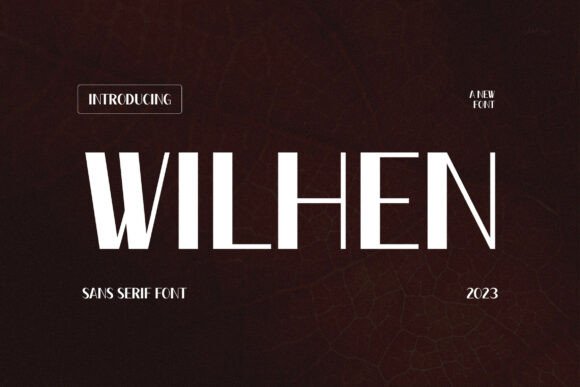
In the vast landscape of digital and print design, selecting the right typeface is often the difference between a project that feels polished and one that feels disjointed. Among the contemporary options available to designers and business owners today, Wilhen has emerged as a notable contender for those seeking clarity without sacrificing character. Wilhen is a modern and neat sans serif font designed specifically for clarity and versatility. Its clean lines and balanced proportions make it perfect for branding, web design, and editorial use. With a sleek, minimalist aesthetic, this typeface brings a fresh, professional feel to any project.
However, understanding a font’s description is only the first step. To truly leverage Wilhen effectively, one must understand its functional anatomy, its psychological impact on readers, and the specific scenarios where it outperforms other sans serifs. This guide explores the practical application of Wilhen, moving beyond marketing language to discuss how it actually performs in real-world creative workflows.
The Anatomy of Clarity: Why Wilhen Works
When we describe a typeface as "neat" or "clean," we are usually referring to specific structural decisions made by the type designer. Wilhen does not achieve its minimalist aesthetic by accident; it is the result of deliberate geometric balancing. For general consumers and professionals evaluating this font, it is helpful to understand what makes it readable.
Open Apertures and Letter Recognition
One of the defining characteristics of Wilhen is its open apertures—the gaps found in letters like 'c', 'e', 'a', and 's'. In many condensed or overly stylized sans serifs, these apertures are closed tight, which can cause letters to blur together at small sizes or on low-resolution screens. Wilhen maintains generous openings, ensuring that each glyph remains distinct even when scaled down for mobile interfaces or fine print. This feature is critical for accessibility, as it reduces cognitive load for readers with visual impairments or dyslexia.
Balanced Proportions and Rhythm
Versatility in typography often comes down to rhythm. Wilhen features a consistent x-height and moderate contrast between thick and thin strokes. This balance prevents the text from appearing too heavy (which can feel aggressive) or too light (which can feel fragile). The result is a neutral yet warm texture that allows the content to take center stage. When setting long-form editorial content, this rhythmic consistency helps maintain reader engagement over extended periods, preventing eye fatigue.
Strategic Applications Across Media
While Wilhen is marketed as versatile, no single font is the perfect solution for every conceivable problem. Understanding its ideal use cases helps creators avoid misapplication. Based on its design attributes, Wilhen excels in three primary domains.
Digital Interfaces and Web Design
The digital environment is unforgiving. Fonts must render crisply across varying pixel densities and operating systems. Wilhen’s straightforward geometry translates exceptionally well to screen rendering engines. It is particularly effective for:
- User Interface (UI) Elements: Buttons, navigation menus, and form labels require immediate legibility. Wilhen’s sturdy structure ensures functionality is never compromised by style.
- SaaS Dashboards: Data-heavy applications benefit from Wilhen’s tabular figures and clear differentiation between similar characters (like I, l, and 1), reducing user error in data entry.
- Responsive Editorial: As viewport widths change, Wilhen retains its integrity, avoiding the awkward spacing issues that plague more decorative typefaces.
Corporate Branding and Identity
For business owners, a typeface acts as a silent ambassador. Wilhen offers a "fresh, professional feel" that avoids the baggage associated with ubiquitous system fonts. It signals modernity and competence without leaning into trendy aesthetics that may date a brand within two years. It is an excellent choice for tech startups, financial consultancies, and healthcare providers who need to project trust and innovation simultaneously. Because it lacks distracting ornamentation, it pairs seamlessly with diverse logo marks, allowing the brand symbol to carry the emotional weight while Wilhen handles the informational hierarchy.
Print Editorial and Packaging
Despite its digital strengths, Wilhen respects traditional typographic roots. In print, its ink traps and stroke modulation ensure crisp reproduction on both coated and uncoated paper stocks. It works beautifully for annual reports, product packaging, and magazine layouts where white space is used as an active design element. The font’s neutrality allows photography and illustration to breathe, making it a supportive partner in complex layout compositions.
Evaluating Suitability: Strengths and Considerations
Adopting a new typeface is an investment. Before committing to Wilhen for a large-scale rebrand or website overhaul, it is prudent to weigh its limitations alongside its strengths. Honest evaluation prevents costly redesigns later.
Where Wilhen Shines
- Legibility at Small Sizes: If your project involves dense information architecture, legal disclaimers, or mobile-first design, Wilhen is a safe and reliable bet.
- Cross-Cultural Compatibility: Its standardized forms translate well across Latin-based languages, maintaining visual consistency for global brands.
- Timelessness: Projects intended to last five or more years will benefit from Wilhen’s resistance to fleeting design trends.
Potential Limitations
No tool is universal. There are scenarios where Wilhen might not be the optimal choice:
- High-Emotion Contexts: If a project requires overt warmth, nostalgia, or handcrafted authenticity (such as a boutique bakery or artisan craft shop), Wilhen’s precision might feel too clinical. In these cases, a humanist sans or a textured serif may be more appropriate.
- Display Headlines Requiring Drama: While Wilhen works well for headlines, it is inherently restrained. If you need a typeface that screams, shouts, or dominates a billboard through sheer eccentricity, Wilhen’s polite demeanor may lack the necessary punch.
- Complex Script Support: Always verify language support if your project extends beyond Western European languages. While versatile, specialized scripts may require complementary typefaces.
Pairing Wilhen: Creating Typographic Harmony
A typeface rarely exists in isolation. Wilhen’s greatest asset is its ability to play well with others. Its neutral skeleton makes it an exceptional anchor for more expressive partners.
For a classic editorial look, pair Wilhen with a high-contrast serif like Playfair Display or Merriweather. The serif handles the narrative voice, while Wilhen manages captions, sidebars, and metadata. The contrast between the serif’s tradition and Wilhen’s modernity creates a sophisticated tension that keeps layouts dynamic.
For a tech-forward aesthetic, consider pairing Wilhen with a monospaced font like JetBrains Mono or Space Mono. This combination reinforces a sense of engineering precision and coding culture, popular in developer documentation and fintech branding. Wilhen provides the readability for prose, while the mono font highlights code snippets and technical specifications.
Important Note on Hierarchy: When pairing, ensure sufficient contrast in weight and size. Wilhen’s regular weight is quite balanced; if using it for body text, select a display partner with significant bolder weights or distinct stylistic features to establish clear visual hierarchy.
Practical Implementation Tips
To get the most out of Wilhen, consider these technical best practices during implementation:
- Leverage OpenType Features: Check if your version of Wilhen includes alternate glyphs, ligatures, or stylistic sets. These subtle details can customize the font’s personality for specific brand touchpoints without losing its core identity.
- Mind the Line Height: Due to its balanced proportions, Wilhen often requires slightly less leading than older grotesque sans serifs. Test line heights between 1.4 and 1.6 for body text to find the optimal reading comfort zone.
- Test in Context: Never judge a typeface solely on a specimen sheet. Set actual content from your project in Wilhen before licensing. Read it on your phone, print it out, and view it on different monitors. Real-world testing reveals quirks that spec sheets hide.
Making the Final Decision
Wilhen represents a mature approach to sans serif design. It prioritizes function, respects the reader’s time, and provides a stable foundation for communication. For general consumers and professionals tired of choosing between boring utility and impractical novelty, it offers a compelling middle ground.
Ultimately, the value of Wilhen lies not in its novelty, but in its reliability. It is a tool designed to disappear, allowing your message, your brand, and your content to resonate clearly with your audience. Whether you are building a complex web application, refreshing a corporate identity, or laying out an annual report, Wilhen provides the typographic assurance that your work will be read, understood, and respected. By focusing on usefulness and clarity, it embodies the very principles that define effective modern communication.