Evaluating Delightis for Modern Design Projects
Selecting the appropriate typeface is a foundational decision in graphic design that dictates the tone, readability, and overall success of a visual project. For designers seeking a balance between organic warmth and contemporary structure, Delightis presents a specific solution within the script handwriting category. It is characterized as a clean, stylish, and modern font that aims to provide elegance without sacrificing legibility. This evaluation explores the functional attributes of Delightis, its ideal applications, and the practical considerations necessary to determine if it aligns with specific project requirements.
Defining the Visual Characteristics of Delightis
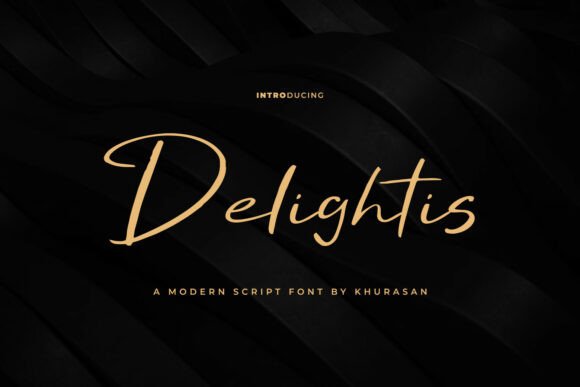
Delightis distinguishes itself from traditional calligraphy scripts through its emphasis on cleanliness and modern geometry. While many script fonts prioritize ornate flourishes and historical accuracy, Delightis adopts a streamlined aesthetic. The letterforms exhibit consistent stroke widths and open counters, which contribute to a sense of airiness and approachability. This "modern elegant" classification suggests that the typeface avoids excessive distress or grunge textures, opting instead for smooth curves and refined terminals.
The font’s stylish nature is derived from its rhythm and flow. Unlike rigid display fonts, Delightis retains the human element of handwriting, yet it possesses enough structural discipline to function in professional layouts. This duality makes it a versatile candidate for projects that require a personal touch but must maintain brand consistency. The design prioritizes clarity, ensuring that the decorative aspects of the script do not interfere with immediate recognition, a common pitfall in more elaborate handwriting typefaces.
Strategic Applications and Use Cases
The versatility of Delightis allows it to integrate into a wide array of creative deliverables. However, its specific weight and style make it particularly effective in certain contexts. Understanding where this typeface performs best helps designers allocate it efficiently within their asset library.
- Branding and Logotypes: The clean lines of Delightis make it suitable for boutique brands, beauty products, and lifestyle companies. Its elegance conveys sophistication, while the handwritten foundation suggests authenticity and craftsmanship.
- Editorial and Publishing: For book covers and magazine headers, Delightis offers high impact at larger sizes. It provides sufficient contrast against serif or sans-serif body text, creating a clear visual hierarchy without overwhelming the cover composition.
- Event Stationery: Wedding invitations, save-the-dates, and event banners benefit from the font’s romantic yet uncluttered aesthetic. It bridges the gap between formal tradition and modern minimalism.
- Marketing Collateral: In posters and social media graphics, the font’s stylish characteristics help capture attention quickly. Its legibility ensures that key messages remain accessible even when viewed on smaller screens or from a distance.
Benefits and Functional Advantages
The primary advantage of incorporating Delightis into a design system is its ability to humanize digital and print media. In an era dominated by geometric sans-serifs, a well-crafted script introduces emotional resonance. Delightis achieves this while maintaining professional standards. Its "clean" attribute is perhaps its most significant functional benefit; it reduces cognitive load for the reader compared to denser, more complex scripts. This readability factor extends the font's utility beyond purely decorative headlines to subheaders and short pull quotes.
Furthermore, the font’s modern construction facilitates easier pairing with other typefaces. Because it lacks heavy ornamentation, Delightis does not compete visually with minimalist sans-serifs or classic serifs. This compatibility simplifies the typesetting process and allows for greater flexibility in layout design. Designers can confidently match it with a large set of complementary fonts, streamlining the creation of cohesive brand identities and multi-page publications.
Tradeoffs and Practical Considerations
Despite its strengths, Delightis is not a universal solution. Objective evaluation requires acknowledging limitations and tradeoffs inherent to the script genre and this specific design.
Legibility at Small Sizes
While cleaner than many alternatives, Delightis remains a script typeface. At small point sizes, the connecting strokes and intricate curves may lose definition, leading to reduced readability. It is generally ill-suited for body copy, captions, or dense informational text. Designers should reserve this font for display purposes where size and spacing can be controlled to preserve integrity.
Tone Specificity
The elegant and stylish nature of Delightis implies a specific mood. It may feel out of place in designs requiring industrial strength, technological precision, or stark utilitarianism. If a project demands a neutral or corporate voice, the inherent personality of this handwriting font could introduce unintended informality or sentimentality. Evaluating the brand voice against the font’s character is a critical pre-selection step.
Technical Rendering
Script fonts often rely on OpenType features such as ligatures, swashes, and contextual alternates to mimic natural handwriting flow. Users must verify that their chosen software supports these features and that the font file includes them. Without proper activation of alternates, repeated characters in Delightis may appear mechanical, undermining the organic aesthetic the font is designed to provide.
Comparative Analysis: When to Choose Alternatives
Decision-making involves comparing Delightis against other options in the typography landscape. There are specific scenarios where alternative typefaces may offer superior performance.
If maximum legibility is the paramount concern, a monoline script or a rounded sans-serif may be preferable. These categories sacrifice some calligraphic flair for uniform clarity. Conversely, if the project requires historical authenticity or luxury heritage, a traditional copperplate or blackletter script might communicate value more effectively than the modern stylings of Delightis. Additionally, for highly technical or data-heavy interfaces, the decorative elements of any script font are typically contraindicated; functional UI typefaces should take precedence in those environments.
Designers should also consider licensing and technical compatibility. If a project requires extensive multilingual support or variable font weights for responsive web design, users must confirm that Delightis meets these specifications. Many stylish script fonts are limited to Latin character sets or single weights, which can restrict scalability for global campaigns.
Making the Final Selection Decision
Determining whether Delightis is the right choice requires testing within the actual design context. Specimens should be set in the intended sizes, colors, and backgrounds to evaluate real-world performance. Designers should assess whether the font enhances the message or distracts from it. The goal is to find a typeface that serves the content, not merely one that looks appealing in isolation.
Ultimately, Delightis offers a compelling option for creatives seeking to add lovely, elegant designs to their portfolio. Its strength lies in its ability to modernize the script category, making it accessible for contemporary commercial work. By weighing its clean aesthetic against project constraints and audience expectations, designers can make an informed decision that leverages the font’s unique capabilities while mitigating potential drawbacks. When aligned correctly with project goals, Delightis serves as a powerful tool for creating distinctive, memorable visual communications.