Elevating Visual Identity: The Strategic Application of Gastonia Script in Modern Design
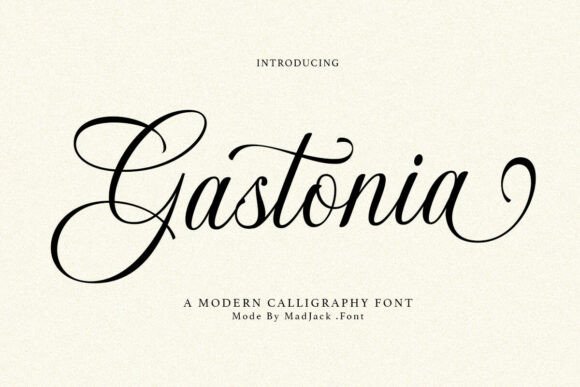
In the expansive landscape of digital typography, the search for a typeface that balances contemporary aesthetics with traditional elegance often leads designers to a critical juncture. While minimalist sans-serifs dominate user interfaces and corporate communications, there remains a persistent demand for lettering that conveys emotion, heritage, and exclusivity. Gastonia Script occupies this specific niche as an elegant modern calligraphy font that exudes luxury and sophistication. Unlike standard script fonts that may lean too heavily into vintage nostalgia or overly casual handwriting, Gastonia offers a refined middle ground. Its flowing strokes, graceful curves, and refined letterforms make it a versatile tool for professionals seeking to inject romance and class into visual projects without sacrificing legibility or modern relevance.
Anatomical Distinctions and Typographic Character
To understand why Gastonia Script performs effectively across various media, one must examine its anatomical construction. The typeface is not merely a collection of decorative glyphs; it is a system of shapes designed to guide the eye while evoking a tactile sensation. The contrast between thick downstrokes and hairline upstrokes mimics the pressure sensitivity of a physical nib pen, yet the vector execution ensures crisp rendering on high-resolution screens and print substrates alike.
The defining characteristic of Gastonia is its controlled fluidity. Many modern scripts suffer from excessive ornamentation that clutters the reading experience. In contrast, Gastonia maintains open counters and deliberate spacing within its ligatures. This intentionality allows the font to remain readable even at smaller point sizes, a common failure point for calligraphic typefaces. The terminals—the ends of the strokes—are tapered softly rather than blunted, contributing to a sense of movement and airiness. For designers and educators studying type anatomy, Gastonia serves as a prime example of how digital type design can preserve the organic imperfections of hand-lettering while adhering to strict grid-based consistency required for professional typesetting.
Psychological Impact in Consumer Perception
Typography acts as a non-verbal cue that shapes consumer perception before a single word is processed cognitively. When business owners and marketers select Gastonia Script, they are leveraging established semiotic associations. The high stroke contrast and sweeping ascenders signal premium quality and attention to detail. In behavioral psychology, this aligns with the "aesthetic-usability effect," where users perceive more aesthetically pleasing designs as more usable and trustworthy.
For luxury branding, this psychological trigger is paramount. A skincare label set in Gastonia suggests botanical purity and artisanal craftsmanship, distinguishing the product from clinical, mass-market alternatives. Similarly, in the hospitality sector, menus and signage utilizing this typeface prepare guests for an elevated dining experience. The font does not just display information; it frames the value proposition. Creators must recognize that choosing Gastonia is a strategic decision to position a brand within a higher tier of perceived value, justifying premium pricing through visual association alone.
Practical Implementation Across Key Industries
The versatility of Gastonia Script extends beyond theoretical aesthetics into tangible applications. Its utility varies significantly depending on the industry context, requiring designers to adapt their approach to hierarchy, pairing, and medium.
- Wedding and Event Stationery: This is perhaps the most natural habitat for Gastonia. Its timeless charm aligns perfectly with matrimonial traditions. However, modern wedding design has moved away from rigid formality. Gastonia bridges this gap by feeling personal yet polished. It works exceptionally well for names and dates on invitations, while body text should be relegated to a clean serif or geometric sans-serif to maintain readability. The key here is restraint; allowing the script to breathe with ample whitespace enhances its romantic impact.
- Upscale Packaging and Labeling: On physical products, texture matters. Gastonia’s refined letterforms respond beautifully to embossing, foil stamping, and spot UV treatments. The varying stroke widths create natural opportunities for light play when printed with metallic inks. For wine labels, perfume boxes, or gourmet food packaging, the font adds a layer of sensory depth. Designers should test the font at actual print size early in the process, as intricate curves can sometimes fill in during production on uncoated papers.
- Editorial and Fashion Layouts: In magazine spreads and digital lookbooks, Gastonia functions as a powerful headline element. It breaks the monotony of grid-based editorial layouts, introducing organic rhythm to structured pages. When used for pull quotes or section headers, it creates a visual pause that encourages deeper engagement with the content. The font’s sophistication complements high-fashion photography without competing with the imagery, acting as a supportive frame rather than a distraction.
- Digital Branding and Social Media: While primarily a print-centric style, Gastonia translates well to digital environments when used correctly. For Instagram stories, Pinterest pins, or website hero sections, it provides instant brand recognition. However, web implementation requires careful consideration of load times and fallback stacks. Designers should ensure that the webfont version is optimized and that CSS line-heights are adjusted to accommodate the tall ascenders and descenders typical of calligraphic styles.
Technical Considerations for Optimal Rendering
Achieving professional results with Gastonia Script requires technical proficiency beyond simple font selection. Calligraphy fonts are sensitive to their environment, and improper handling can degrade their elegance. One primary consideration is tracking (letter-spacing). Unlike uppercase sans-serifs, scripts like Gastonia should generally never have positive tracking applied. Increasing space between letters breaks the connecting strokes and destroys the illusion of continuous handwriting. If adjustments are needed, negative tracking or optical kerning is preferred to tighten connections.
Furthermore, line height (leading) demands special attention. The vertical metrics of Gastonia include significant space above and below the x-height to accommodate swashes and loops. Standard auto-leading often causes lines to collide or appear cramped. Designers should manually increase leading to at least 140-160% of the point size to preserve the airy, luxurious feel of the typeface. In CSS, this translates to generous line-height values and potentially adjusting padding around text containers to prevent clipping on responsive displays.
Strategic Font Pairing and Hierarchy
Gastonia Script is a protagonist typeface; it commands attention and should rarely be used for extended body copy. Its success depends heavily on what surrounds it. Effective pairing creates a dialogue between the expressive and the functional. The goal is to support the script’s personality without mimicking it.
- Geometric Sans-Serifs: Fonts like Montserrat, Futura, or Avant Garde provide a stark, modern contrast to Gastonia’s organic curves. This combination feels fresh and contemporary, ideal for tech-forward luxury brands or modern wedding stationery. The rigidity of the sans-serif grounds the fluidity of the script.
- Transitional Serifs: Pairing Gastonia with a classic serif like Baskerville or Garamond leans into tradition and heritage. This combination reinforces the timeless charm of the script and is particularly effective for legal documents, certificates, or heritage brands. The shared historical roots create visual harmony.
- Monospaced Typefaces: For a more avant-garde or editorial approach, pairing Gastonia with a monospace font creates unexpected tension. This juxtaposition highlights the handcrafted nature of the script against mechanical precision, suitable for art galleries, independent publishers, or creative portfolios.
When establishing hierarchy, Gastonia should typically occupy the top tier (headlines, logos, signatures). Secondary information should transition to the supporting typeface. Avoid using multiple scripts in the same layout; if Gastonia is present, other decorative elements should be minimized to prevent visual noise. The sophistication of the design comes from the confidence of using one strong expressive voice supported by quiet, functional companions.
Navigating Accessibility and Legibility
While aesthetics are central to Gastonia’s appeal, responsible design mandates accessibility. Calligraphy fonts inherently pose challenges for readers with dyslexia or low vision due to similar character shapes and complex forms. Professionals must balance artistic expression with inclusivity. Gastonia should be reserved for large-format display text where individual characters are distinct and easily recognizable.
Never use Gastonia for navigation menus, legal disclaimers, pricing tables, or instructional text. These elements require maximum clarity and should utilize highly legible sans-serifs or simple serifs. Additionally, color contrast ratios must be maintained. The thin hairlines of the script can disappear against busy backgrounds or insufficiently contrasting colors. Testing designs with accessibility tools and viewing them at various distances ensures that the luxury conveyed by Gastonia does not come at the cost of usability. By treating the font as a specialized accent rather than a universal solution, designers honor both the craft of typography and the needs of diverse audiences.
The Role of Context in Typographic Success
Ultimately, the effectiveness of Gastonia Script is determined by contextual awareness. It is a tool of specific intent, not a default setting. For researchers and students of design, analyzing its application reveals broader trends in visual culture: the cyclical return to craftsmanship in a digital age, the commodification of luxury through typography, and the enduring human connection to handwritten forms. For practitioners, mastery lies in knowing when to deploy such a distinctive voice and when to hold back.
The font’s ability to add a touch of romance and class is undeniable, but these qualities must be earned through thoughtful composition. Whether creating a bespoke wedding suite, rebranding a boutique hotel, or designing an editorial spread, the designer acts as a curator of tone. Gastonia provides the vocabulary of elegance; the designer provides the grammar of communication. When aligned correctly, the result is work that resonates emotionally while functioning flawlessly, proving that in the realm of visual identity, beauty and utility are not mutually exclusive but inextricably linked.