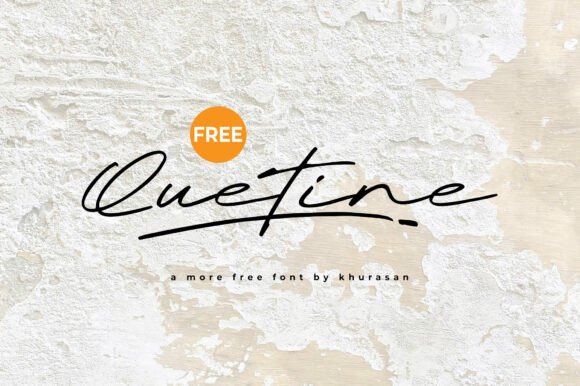
Quetine Font: Modern Handwritten Style for Creative Projects
In the vast landscape of digital typography, finding a typeface that balances genuine personality with professional legibility is often a challenge. Quetine emerges as a distinct solution for designers and creators seeking that elusive middle ground. It is a modern, cute handwritten font that avoids the chaotic illegibility often associated with script styles while steering clear of the sterile uniformity found in standard sans-serifs. This duality makes it an exceptionally versatile tool for visual communication, allowing you to inject warmth and human touch into projects without sacrificing clarity or brand authority.
The appeal of Quetine lies in its organic flow. Unlike rigid geometric fonts, it mimics the natural cadence of hand lettering, complete with subtle variations in stroke weight and baseline alignment. These imperfections are intentional design features that create a sense of intimacy and approachability. For marketers, bloggers, and small business owners, this translates to immediate emotional engagement. When an audience encounters Quetine in a headline or logo, they subconsciously perceive the message as personal and crafted rather than mass-produced. Understanding how to leverage this characteristic is key to maximizing its effectiveness across different media.
Elevating Brand Identity and Logo Design
For entrepreneurs and freelancers building a personal brand or a boutique business, typography serves as the visual voice of the company. Quetine is particularly effective for brands in the lifestyle, beauty, artisanal food, and creative education sectors. Its aesthetic suggests craftsmanship and care, making it ideal for logos that need to feel established yet friendly. When designing a wordmark with this font, consider the spacing carefully. Because handwritten fonts have unique character widths, manual kerning is often necessary to ensure the letters nestle together naturally without appearing crowded or disjointed.
A practical application for logo design involves pairing Quetine with a minimalist sans-serif for secondary text. If your primary brand name is set in Quetine to capture attention and convey personality, use a clean, neutral typeface for taglines, contact information, or legal disclaimers. This contrast establishes a clear visual hierarchy. The handwritten element acts as the hook, while the supporting typeface ensures functional readability. This combination prevents the design from becoming overwhelming and maintains a professional polish suitable for business cards, social media profiles, and website headers.
Editorial Layouts and Print Media Applications
Magazines, book covers, and zines require typography that guides the reader through content while setting the appropriate tone. Quetine excels in editorial contexts where the goal is to break up dense blocks of body text or highlight specific narratives. On book covers, particularly in genres like memoir, poetry, young adult fiction, or self-help, this font can signal vulnerability and authenticity. It tells potential readers before they even open the cover that the content inside is deeply human. For best results in print, ensure you are working with high-resolution files and testing the font at various sizes to maintain stroke integrity during the printing process.
In magazine layouts and newsletters, Quetine functions beautifully as a display font for pull quotes, sidebar titles, or section dividers. Instead of using bold or italicized body copy to emphasize a key takeaway, replacing it with a handwritten style creates a visual pause. It mimics the experience of someone annotating a page with a pen, which encourages the reader to stop and absorb the highlighted information. However, restraint is vital here. Overusing a decorative font in editorial design leads to fatigue. Limit Quetine to moments of emphasis to preserve its impact and keep the reading experience smooth.
Digital Content and Social Media Strategy
The digital space demands instant recognition, especially on platforms like Instagram, Pinterest, and TikTok where users scroll rapidly. Quetine’s distinctive silhouette makes it highly effective for social media graphics, story overlays, and YouTube thumbnails. For content creators and influencers, consistency in typography helps build brand recall. Using this font regularly in your templates creates a cohesive visual identity that followers begin to associate with your content. When creating banners or promotional posts, ensure there is sufficient contrast between the Quetine text and the background image. Handwritten fonts can sometimes lose definition against busy photography, so utilizing solid color blocks or subtle drop shadows can enhance legibility without compromising the font's charm.
Email marketing also benefits from this typographic choice. Subject lines and header images featuring Quetine can increase open rates by standing out in a cluttered inbox dominated by standard system fonts. It signals a newsletter that offers value and connection rather than just transactional updates. For educators and course creators, using this font in presentation slides or worksheet headers can make learning materials feel less intimidating and more engaging. It softens the academic tone and fosters a supportive learning environment, which is particularly useful for adult education or creative workshops.
Practical Guidelines for Effective Typography
To get the most out of Quetine, it is important to understand the technical and aesthetic boundaries of handwritten typography. While the font is designed to be versatile, certain practices will ensure your designs remain effective and accessible.
- Prioritize Legibility Over Decoration: Never sacrifice readability for style. If a specific word in Quetine becomes difficult to decipher at smaller sizes, switch to a simpler typeface for that instance. Accessibility should always guide your typographic choices.
- Mind the Case Sensitivity: Handwritten fonts often look best in title case or mixed case. Avoid using Quetine in all-caps unless the specific glyph set is designed for it, as capital letters in script fonts can appear aggressive and blocky, negating the softness the font is meant to provide.
- Utilize OpenType Features: Check if the font file includes alternate characters, ligatures, or swashes. These features allow you to customize the flow of words and avoid repetitive letterforms when typing common double letters. Using alternates adds a layer of bespoke quality to your designs.
- Balance White Space: Handwritten fonts carry a lot of visual texture. Give Quetine room to breathe by increasing margins and padding around the text. Cramped layouts diminish the elegance of the script and make the overall design feel chaotic.
- Test Across Devices: What looks lovely on a 27-inch monitor may be illegible on a mobile screen. Always preview your web banners, social posts, and digital products on multiple devices to ensure the font renders correctly and remains readable at all intended sizes.
Integrating Quetine Into Your Creative Workflow
Adopting a new typeface is about more than just installation; it is about expanding your creative vocabulary. Quetine offers a specific flavor of expression that can revitalize stagnant projects. Whether you are designing packaging for a local bakery, creating a wedding invitation suite, or rebranding a tech startup aimed at Gen Z, this font provides a bridge between tradition and modernity. It allows you to communicate sophistication without stiffness and playfulness without immaturity.
As you incorporate Quetine into your toolkit, experiment with color and texture. Handwritten fonts pair exceptionally well with watercolor textures, paper grains, and muted earth tones, but they also create striking juxtapositions against neon gradients and dark modes. The key is intentionality. Every time you select this font, ask yourself what emotion you are trying to evoke and whether the context supports that expression. By treating typography as a strategic element of your design process rather than an afterthought, you transform simple text into a powerful vehicle for storytelling. Add Quetine to your next project not just because it is cute, but because it solves the problem of making digital spaces feel authentically human.