Mybasic: Elevating Modern Design Through Minimalist Typography
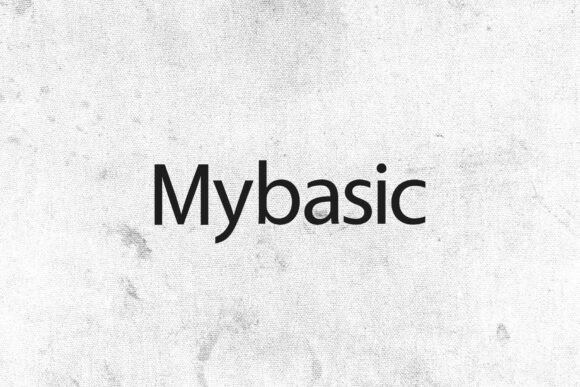
In a digital landscape saturated with visual noise, finding a typeface that communicates clarity without shouting is a genuine challenge for designers and business owners alike. Mybasic stands out as the epitome of modern minimalist design, offering a solution for those who believe that true sophistication lies in restraint. This clean, incredibly versatile sans serif font is built on fundamental simplicity, providing supreme legibility and a contemporary, no-fuss aesthetic that adapts to almost any environment. Rather than demanding attention through ornate details or aggressive geometry, Mybasic earns its place by being effortlessly readable and structurally sound.
The typeface features subtle curves and a balanced weight distribution that prevents it from feeling sterile or mechanical. This humanist touch makes it ideal for professional websites, modern branding, clean print layouts, and applications where clarity and understated sophistication are key. It functions as a true design workhorse, capable of carrying heavy informational loads while maintaining an airy, approachable presence. For creatives and strategists aged 20 to 50 who are tasked with building functional yet beautiful interfaces, understanding how to leverage this specific typographic voice can transform a project from merely adequate to exceptionally polished.
Real-World Applications in Digital Interfaces
The primary strength of Mybasic emerges when it is put to work in high-stakes digital environments where user experience depends entirely on readability. Consider the dashboard of a SaaS platform or a financial analytics tool. In these contexts, users are often scanning dense tables of data, interpreting complex charts, or navigating multi-layered menus. A decorative or overly stylized font introduces cognitive friction, slowing down comprehension. Mybasic eliminates this friction. Its open apertures and consistent stroke width ensure that characters remain distinct even at small sizes on low-resolution screens.
Beyond utility-driven interfaces, this typeface excels in e-commerce settings where the product must remain the hero. When designing a fashion retailer’s online store or a minimalist furniture catalog, the typography should act as a transparent vessel for content rather than a competing visual element. Mybasic provides a neutral backdrop that allows photography and product descriptions to take center stage. The subtle warmth in its letterforms prevents the shopping experience from feeling cold or transactional, fostering a sense of trust and quality that directly influences conversion rates. Designers frequently observe that switching to a more balanced sans serif like this can reduce bounce rates simply because the page feels easier to process.
Branding and Corporate Identity Systems
For brand strategists developing identity systems for startups or rebranding established companies, versatility is non-negotiable. A logo might look striking on a billboard, but it also needs to function as a 16-pixel favicon or embroidered on a polo shirt. Mybasic offers the structural integrity required for this scalability. Its geometric foundation ensures that it holds up in large-format signage, while its refined details prevent it from looking clumsy in business cards or email signatures.
This adaptability extends to tone. Many sans serifs lean heavily into either technical coldness or playful informality. Mybasic occupies a valuable middle ground that suits industries ranging from legal tech and healthcare to creative agencies and hospitality. A law firm can use it to signal modern transparency without sacrificing authority, while a boutique hotel can use it to convey contemporary luxury without appearing pretentious. This chameleon-like quality reduces the need for secondary typefaces in a brand kit, streamlining design workflows and ensuring consistency across touchpoints.
Print Layouts and Editorial Design
While digital application is a major focus, the utility of Mybasic in print media remains significant. In editorial design for magazines, annual reports, or white papers, the rhythm of reading is paramount. Long-form text set in this typeface benefits from its generous x-height and comfortable line spacing. Readers can engage with extended content without experiencing eye strain, which is critical for publications aiming to retain audience attention in an era of skimming.
Designers working on packaging also find value in its clean lines. On physical products, space is often limited, and regulatory text must be legible at minute sizes. Mybasic performs reliably in these constraints, maintaining character definition where other fonts might blur or fill in during the printing process. Furthermore, its neutrality allows it to pair seamlessly with illustrative elements or vibrant color palettes without creating visual conflict. It anchors the design, providing a stable typographic grid around which more expressive artistic choices can orbit.
Practical Considerations Before Implementation
Despite its many strengths, adopting Mybasic requires thoughtful consideration to avoid common pitfalls associated with minimalist typography. The very neutrality that makes it versatile can also lead to generic results if not handled with intention. Because the font does so much heavy lifting quietly, the overall success of the design often depends on macro-typography: line height, tracking, margin width, and hierarchy. Simply dropping Mybasic into a layout without adjusting these parameters may result in a flat, uninspired composition.
- Hierarchy Management: Since Mybasic has a relatively uniform texture, establishing clear visual hierarchy requires deliberate manipulation of size, weight, and whitespace. Relying solely on bold vs. regular weights may not provide enough contrast for complex documents.
- Pairing Strategies: While it pairs well with many serif faces, be cautious when combining it with other geometric sans serifs. The similarities can create visual vibration rather than harmony. Contrast with a humanist serif or a monospaced font often yields better results.
- Contextual Tone: Evaluate whether your project requires emotional expressiveness. If the goal is to evoke nostalgia, rebellion, or organic warmth, a strictly minimalist sans serif might feel too detached. Mybasic supports emotion through content and layout, but it does not generate it intrinsically.
- Licensing and Availability: Always verify licensing terms for commercial web use versus desktop publishing. Ensuring you have the correct license for all intended mediums prevents legal complications and guarantees access to necessary file formats like variable fonts for responsive design.
Optimizing for Accessibility and Performance
Modern design is inseparable from accessibility standards, and Mybasic aligns naturally with WCAG guidelines regarding text legibility. Its distinct character shapes help differentiate similar letters (such as capital I, lowercase l, and number 1), which is crucial for users with dyslexia or low vision. However, designers must still ensure sufficient color contrast and appropriate sizing. The font’s clean rendering engine performance also contributes to faster load times compared to heavier, more complex typefaces, indirectly supporting SEO and user retention metrics.
When implementing Mybasic on the web, consider using variable font technology if available. This allows for fine-tuned adjustments to weight and width within a single file, reducing HTTP requests and enabling fluid typography that responds gracefully to different viewport sizes. This technical efficiency complements the aesthetic minimalism, creating a holistic experience where form and function are perfectly aligned. For teams managing design systems, this translates to easier maintenance and greater flexibility as products evolve over time.
Making the Final Selection Decision
Choosing a typeface is ultimately about matching the tool to the task. Mybasic is not a novelty display font meant for fleeting trends; it is a foundational system designed for longevity. If your project demands immediate visual shock or historical reference, look elsewhere. But if your objective is to build a sustainable, scalable, and user-centric communication platform, this typeface deserves serious evaluation. Test it in context early in the design process. Set real content, not lorem ipsum, and view it across multiple devices and lighting conditions. Observe how it interacts with your specific color palette and imagery.
The decision to use Mybasic signals a commitment to clarity and respect for the end user’s time and attention. It acknowledges that in many scenarios, the best design is the one that gets out of the way. By prioritizing legibility and balance over stylistic flourish, designers can create work that ages gracefully and serves its purpose effectively for years to come. Whether you are refining a mobile app interface, designing a corporate report, or establishing a new brand voice, this typeface offers a reliable foundation upon which meaningful experiences can be built. Its quiet confidence allows your message to resonate clearly, proving that sometimes the most powerful statement is the simplest one.