Infusing Warmth and Personality into Design with Feminine Handwriting
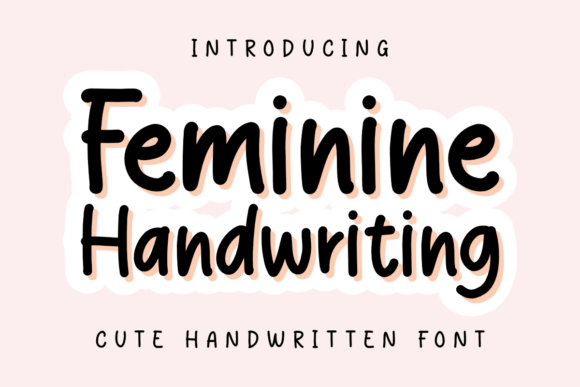
In the vast landscape of digital typography, where clean sans-serifs and structured serifs often dominate professional communication, there remains a persistent demand for typefaces that convey genuine human emotion. Typography is not merely about legibility; it is about tone, voice, and the immediate psychological impact a design has on its viewer. Among the myriad of script options available to modern designers, Feminine Handwriting has emerged as a distinctive choice for projects requiring a specific blend of softness and approachability. This typeface captures a cute and playful aesthetic without sacrificing the organic imperfections that make handwritten fonts feel authentic. Understanding how to leverage this bubbly vibe requires looking beyond simple font selection and examining the broader context of visual communication, brand personality, and user experience.
The Psychology of Rounded Strokes and Soft Aesthetics
To understand why Feminine Handwriting resonates so effectively with audiences, one must first understand the psychology of shape. Typographic research consistently suggests that rounded forms are perceived as safer, friendlier, and more approachable than sharp, angular counterparts. The rounded strokes inherent in this typeface trigger a subconscious association with softness and care. When a viewer encounters text set in Feminine Handwriting, the brain processes the visual information as non-threatening and welcoming. This is particularly crucial in industries where trust and comfort are paramount, such as childcare, wellness, counseling, and artisanal retail.
The "bubbly vibe" described in the font’s characteristics serves a functional purpose beyond mere decoration. It acts as a visual tone indicator, signaling to the reader that the content within is personal rather than corporate. In an era where consumers are increasingly skeptical of polished, impersonal marketing, the casual charm of this typeface bridges the gap between business and individual. It mimics the intimacy of a note left by a friend, thereby lowering the cognitive barrier to engagement. For educators and researchers communicating complex or sensitive topics to lay audiences, this typographic warmth can make dense information feel more digestible and less intimidating.
Balancing Playfulness with Professional Utility
A common misconception among design professionals is that playful fonts lack utility in serious contexts. However, Feminine Handwriting demonstrates that personality and function are not mutually exclusive. The key lies in strategic application. While the font is undeniably girly and sweet, its structure maintains enough consistency to remain readable at various sizes. This distinguishes it from chaotic scratch-style scripts that prioritize texture over legibility. For business owners and creators, this means the font can be used confidently in customer-facing materials where clarity is still required.
The versatility of this typeface allows it to serve as a primary display font for headings or as an accent element within a broader typographic system. Pairing Feminine Handwriting with a neutral geometric sans-serif creates a dynamic contrast that highlights the handwritten elements while maintaining structural integrity. This combination is particularly effective in social media graphics, where the goal is to stop the scroll with personality while ensuring the caption or call-to-action remains instantly comprehensible. The font brings the emotion, while the supporting typeface delivers the facts.
Practical Applications Across Creative and Commercial Sectors
The real-world relevance of Feminine Handwriting extends across multiple disciplines, each utilizing its unique attributes to solve specific communication challenges. By examining these use cases, professionals can better visualize how to integrate this tool into their own workflows.
- Planners and Stationery: The planner community thrives on aesthetics that inspire organization and joy. Feminine Handwriting provides a sense of personalization that printed standard fonts cannot achieve. Its casual charm makes daily tasks feel less like chores and more like self-care rituals. For stationery designers, this font adds value by evoking the nostalgia of pen-on-paper correspondence.
- Product Packaging and Labeling: On crowded retail shelves, packaging must communicate brand values instantly. For products targeting a female demographic or emphasizing natural, handmade qualities, this typeface signals authenticity. Whether on a jar of artisanal jam, a box of bath bombs, or a greeting card, the soft strokes suggest that a human being was involved in the creation process, justifying premium pricing through perceived craftsmanship.
- Social Media Content Creation: Influencers and social media managers utilize Feminine Handwriting to create cohesive visual identities. The font’s personality translates exceptionally well to Instagram Stories, Pinterest pins, and TikTok overlays. It helps establish a recognizable brand voice that feels consistent yet spontaneous, encouraging higher engagement rates through relatable visual storytelling.
- Educational Materials: Teachers and curriculum developers find immense value in fonts that mimic positive reinforcement. Feminine Handwriting is excellent for certificates, classroom decor, and worksheet headers. The friendly tone helps create a safe learning environment, reducing anxiety for young learners or students in special education settings who may respond better to softer visual stimuli.
Navigating Legibility and Accessibility Considerations
While the aesthetic benefits of Feminine Handwriting are clear, responsible design requires attention to accessibility. Handwritten fonts, by nature, present unique challenges for readers with dyslexia or visual impairments. The very irregularities that give the font its charm can also impede rapid decoding. Professionals must therefore exercise restraint and intentionality when implementing this typeface.
Best practices dictate that Feminine Handwriting should generally be reserved for short bursts of text—headlines, pull quotes, labels, and signatures—rather than long-form body copy. Ensuring high contrast between the text and background is non-negotiable; the delicate strokes can disappear against busy patterns or low-contrast colors. Furthermore, designers should avoid using all-caps with this specific style, as the uniform height negates the word-shape recognition cues that aid readability. Maintaining the natural case flow preserves the font’s intended rhythm and ensures that the design remains inclusive without sacrificing its signature sweet touch.
The Role of Texture in Digital Authenticity
We exist in a predominantly digital ecosystem, yet there is a growing fatigue regarding sterile, pixel-perfect perfection. Feminine Handwriting capitalizes on the trend of "digital tactility." Even when viewed on a high-resolution screen, the font retains the memory of analog tools. This characteristic is vital for brands attempting to translate physical experiences into digital spaces. For example, a bakery launching an e-commerce site can use this typography to replicate the feeling of reading a chalkboard menu or a handwritten recipe card, thus preserving the sensory essence of the brick-and-mortar experience.
This textural quality also influences the perceived value of digital products. In the realm of digital downloads, printables, and online courses, the typography sets expectations. A course on mindfulness or creative journaling presented in rigid Arial feels disconnected from its subject matter. The same content presented with Feminine Handwriting feels aligned, curated, and thoughtful. The font acts as a semiotic shortcut, telling the user that the creator understands the nuance of the topic. For researchers and academics publishing qualitative studies or ethnographies, incorporating such typefaces in presentation decks or supplementary materials can humanize data, reminding stakeholders that behind every statistic is a human story.
Strategic Integration for Business Identity
For business owners, adopting Feminine Handwriting is a strategic branding decision that defines market positioning. It is a declaration of values. Choosing this typeface signals that the business prioritizes connection over efficiency, and warmth over authority. This is not suitable for every industry—a law firm or cybersecurity agency would likely find it counterproductive—but for lifestyle brands, coaches, therapists, and creatives, it is a powerful differentiator.
When integrating this font into a brand identity system, consistency is key. It should not be used sporadically but rather codified within brand guidelines. Define specifically where it appears: perhaps only in email sign-offs, seasonal promotions, or testimonial highlights. This controlled usage prevents the brand from appearing juvenile while maximizing the font’s emotional impact. Additionally, businesses should consider the cultural connotations of "feminine" aesthetics in their specific market. While the font is universally soft, ensuring it aligns with the target audience's definition of femininity and playfulness prevents miscommunication. In some contexts, pairing it with bolder, more grounded imagery can create a sophisticated juxtaposition that appeals to a wider demographic, proving that softness does not equate to weakness.
Ultimately, Feminine Handwriting represents more than just a collection of glyphs; it is a tool for emotional resonance. In a design world often obsessed with minimalism and grid systems, it offers permission to be expressive, imperfect, and kind. Whether used to sell a product, teach a concept, or simply organize a life, its rounded strokes and bubbly personality remind us that behind every screen and every printed page, there is a human desire for connection. By understanding both the psychological underpinnings and the practical constraints of this typeface, designers and creators can harness its full potential to craft messages that are not only seen but deeply felt.