Designing with Warmth: The Practical Impact of Mega Show – a Playful Handwritten Font
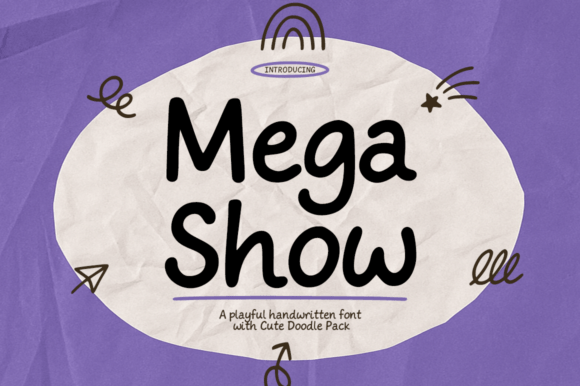
In the vast landscape of digital typography, finding a typeface that balances aesthetic charm with functional legibility is a persistent challenge for designers and content creators. While sleek sans-serifs dominate corporate branding and elegant serifs define editorial layouts, there remains a significant demand for typefaces that evoke human connection and approachability. Mega Show – a Playful Handwritten font occupies this specific niche by offering a chunky, marker-style aesthetic that prioritizes organic warmth over rigid perfection. Understanding how to leverage this typeface effectively requires looking beyond its visual appeal to examine its structural characteristics, psychological impact, and practical applications across various media.
The Psychology of Imperfection in Digital Typography
The primary value proposition of Mega Show lies in its deliberate rejection of geometric uniformity. In an era where AI-generated imagery and vector-perfect logos are ubiquitous, audiences have developed a subtle fatigue toward sterile design. This font counters that trend through specific typographic choices that mimic natural handwriting. The slightly uneven baselines create a rhythmic bounce that guides the eye without feeling mechanical, while rounded terminals soften the visual weight of each character.
This "bubbly" aesthetic serves a distinct psychological function. Research in design psychology suggests that rounded, irregular shapes are perceived as safer, friendlier, and more trustworthy than sharp, angular forms. When used in educational materials or children’s products, Mega Show reduces cognitive friction, making text feel less like an instruction and more like a conversation. For adult audiences, it triggers nostalgia and playfulness, creating an emotional bridge that standard display fonts often fail to establish. This makes it an essential tool for brands attempting to humanize their digital presence.
Balancing Boldness with Readability
A common pitfall with handwritten display fonts is poor scalability; they often lose definition when sized down or become overwhelming when scaled up. Mega Show addresses this through its bold weight construction. The thick strokes ensure high visibility even at smaller sizes, which is critical for social media graphics where screen real estate is limited. However, the boldness is tempered by open counters (the enclosed spaces within letters like 'o' and 'e'), preventing the characters from appearing muddy or cluttered.
This balance allows the typeface to function as a headline or subhead rather than merely decorative filler. Designers can utilize it for primary calls-to-action or key messaging without sacrificing clarity. The chunky nature of the letterforms provides ample space for color manipulation, allowing for gradients, textures, or drop shadows that enhance depth without compromising the integrity of the glyph structure.
Enhancing Workflow with Integrated Visual Assets
One of the most significant efficiency boosters included with this typeface is the supplementary Cute Doodle Pack. In professional design workflows, sourcing matching iconography is often a time-consuming bottleneck. A designer might find the perfect playful font but then struggle to locate arrows, stars, or abstract shapes that share the same stroke width, texture, and artistic sensibility.
- Visual Consistency: The included doodles are drawn with the same marker-style logic as the font itself, ensuring that embellishments never look pasted on or stylistically disjointed.
- Composition Guidance: Arrows and directional shapes help create visual hierarchy and flow, directing viewer attention to critical information or interactive elements.
- Negative Space Management: Abstract shapes allow designers to fill awkward gaps in layouts without adding textual clutter, maintaining the airy, organic feel of the composition.
- Rapid Prototyping: Having a cohesive asset library accelerates the mockup phase, allowing creators to test concepts quickly before committing to custom illustration work.
This integration transforms Mega Show from a simple font file into a comprehensive design system for casual aesthetics. It acknowledges that typography does not exist in a vacuum; it exists alongside graphical elements that support communication.
Sector-Specific Applications and Best Practices
While versatile, Mega Show performs best when applied to contexts that benefit from its inherent cheerfulness. Understanding these use cases helps prevent misuse in environments requiring solemnity or extreme formality.
Educational Materials and Children’s Publishing
In early childhood education, typography acts as a scaffolding tool for literacy. The authentic, hand-drawn look of Mega Show mirrors the writing style children are learning to produce themselves, reinforcing letter recognition through familiarity. For book covers and interior spreads, the bold weight ensures titles pop against illustrated backgrounds. Educators and self-publishers should pair this font with simple, high-contrast body text to maintain readability for emerging readers while using Mega Show to inject engagement and fun.
Event Marketing and Social Invitations
Party invitations and event flyers rely on tone setting. A wedding invitation demands script elegance, but a birthday party, school fair, or community festival requires energy. Mega Show communicates celebration instantly. When designing for print, ensure the bold strokes have sufficient ink spread allowance; when designing for screens, test the font against both light and dark modes to ensure the bubbly terminals remain distinct. The included star and arrow doodles are particularly effective here for highlighting dates, times, and RSVP details.
Product Packaging and Retail Display
On crowded retail shelves, packaging must compete for attention within milliseconds. The chunky silhouette of this typeface creates a strong shape language that stands out against minimalist competitors. It is exceptionally effective for artisanal foods, toys, pet products, and eco-friendly goods where "handmade" implies quality. Designers should consider using the font for flavor variants or product names while reserving cleaner sans-serifs for nutritional facts and regulatory text to maintain compliance and legibility.
Technical Considerations for Implementation
To maximize the effectiveness of Mega Show, designers must adhere to certain technical best practices. Because the font features uneven baselines, automatic leading (line spacing) settings in software like Adobe Illustrator or Canva may result in colliding ascenders and descenders. Manual adjustment of line height is almost always necessary to preserve the bouncy rhythm without overlapping glyphs.
Furthermore, while the font is designed for headlines, users should resist the urge to set long paragraphs in this style. The very characteristics that make it charming in short bursts—irregularity and boldness—become exhausting over extended reading sessions. Limit usage to titles, pull quotes, captions, and short callouts. Pair it with a neutral, highly legible sans-serif or slab-serif for body copy to create a dynamic contrast that enhances overall layout hierarchy.
Color selection also plays a pivotal role. Because the font has a marker-style origin, it responds beautifully to vibrant, saturated colors that mimic actual ink. Pastels can work for a softer nursery aesthetic, but deep primaries and bright secondaries tend to activate the "joyful" intent most effectively. Avoid thin outlines or low-opacity fills, as these negate the chunky solidity that defines the typeface’s character.
The Value of Authenticity in Modern Branding
Ultimately, the decision to use Mega Show – a Playful Handwritten is a strategic choice about brand voice. In a marketplace saturated with polished, algorithmic perfection, imperfection has become a premium asset. This typeface offers a shortcut to authenticity, providing the warmth of bespoke lettering with the consistency of digital typography.
For business owners and marketers, it signals approachability and creativity. For educators and parents, it signals safety and fun. For designers, it offers a reliable toolkit for injecting personality into projects that might otherwise feel generic. By understanding the structural nuances, leveraging the accompanying doodle assets, and applying the font within appropriate contextual boundaries, creatives can harness the full potential of this bubbly typeface to communicate messages with genuine warmth and undeniable charm. The result is design that doesn't just convey information, but makes the audience smile while receiving it.